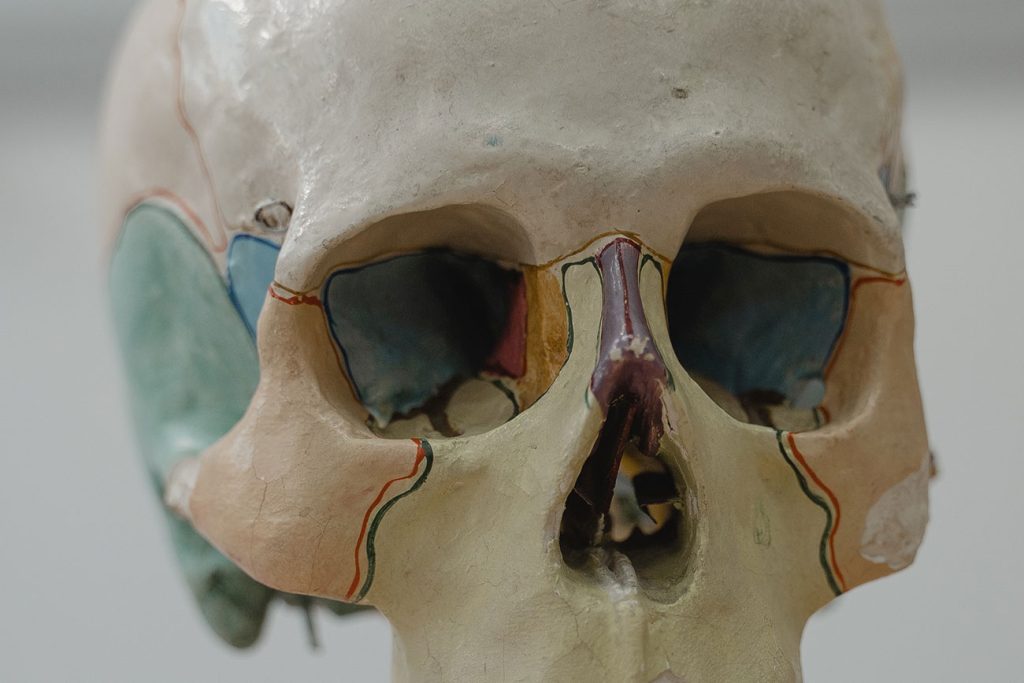
Fundamental Anatomy

Would you like to know more about vocal anatomy?

Would you like to understand the internal movements that create the sounds you’re hearing?

Every Vocal Coach, Singing Teacher, Speech Language Therapist / Pathologist needs a fundamental knowledge of anatomy.

Study with leading experts from around the world
Externally accredited Level 4 course

Buy now
Who is this course for?
This course is for anyone with an interest in vocal anatomy, and is a course unlike any other in terms of the depth and breadth covered.
Buy now
Why do I need this course?

Have you been to singing teaching seminars, masterclasses or vocal conferences and not understood what on earth the presenter is talking about when addressing the structures of the voice? Maybe your initial education didn’t actually cover vocal anatomy?

It can feel difficult to engage with learning anatomy because the study can be boring (long latin names), time consuming (what attaches to what and moves where), and ultimately 2D (textbook illustrations).We set out to change the existing anatomical education in the field of voice by gathering the world’s top anatomists and speakers to guide you to a greater understanding. Naming the parts is one aspect of this learning; the parts we work with are small, with a complex interaction in healthy voice use.
What will I get from this course?

The Fundamental Anatomy (level 4) course is for every vocal coach, singing teacher and speech therapist who feels lacking in their knowledge of the 3D mechanics of the voice. This course gives you a wonderful 365 day resource to dip in and out of, answering your basic questions, filling gaps in your knowledge and sustaining and supporting your further studies with Vocal Health Education.

On your journey through Vocal Health Education’s Fundamental Anatomy course, you will be met with challenging information which can seem overwhelming at times, considering we have some of the greatest experts on the planet presenting this material.
 
This resource is for you to double, triple and even quadruple check that what you are saying to your students resembles the most valid presentation of the evidence base we currently have. Knowledge of anatomy helps us synthesise the understanding of functional and pathologic patterns, and ultimately facilitate change.
Buy now
Pricing and Information

This course has two stages

Stage 1: 365-day access to over 7 hours of learning content

Stage 2: Complete a multiple-choice quiz and submit a written assignment demonstrating your understanding of the material in practice. This will be assessed for a level 4 CPD accredited course

*There are approximately over 7 hours of learning content to watch in total and these videos are able to be viewed as many times as needed over 365 days from purchase.

Course cost £192

Interested in this course? It’s one of four in the Course Compendium.

Get all four of our most popular courses together in one place.
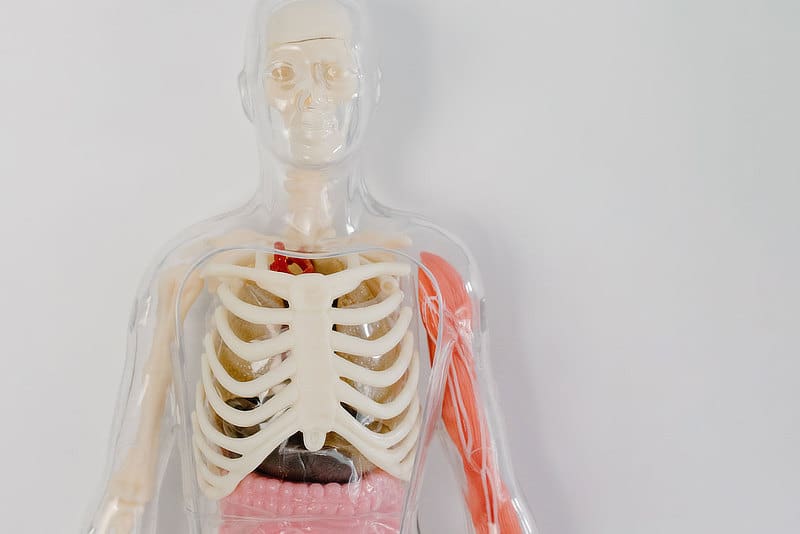
Fundamental Anatomy content
Course Tutors

Very clear concise information , engaging & up to date with new vocal techniques & exercises . All assessments are well explained and cover what is in the course , no missing gaps ! 

Candice McLeod

A well planned and structured course, with high quality content. The content features input from a range of industry experts and the assessment was a positively presented and a useful reflection on the learning journey. Thank you so much for all your support.

David Holden

A super strategic course- full of apt assessment and remedial ideas. The structure was coherent and easy to follow.Eimear was a wonderful assessor!

Margaret Gardyne

The Vocal Health First Aid course has been a wonderful and eye-opening experience. It gave me practical tools and the confidence to protect and care for the voice — my own and others’. I’m truly grateful for what I’ve learned and would recommend it to anyone who values vocal health.

Tanya Todorova

I did the Vocal Health First Aid training. The content was high quality and comprehensive. It has helped me in my work as a speech and language therapist with voice users. I found the online course lecturers very engaging. The course was great value for money. I would recommend.

Louise Day

The clarity and simplicity of the information provided. The knowledge and experience of the presenters. The stress free video assessment!

Jasmin DeSylva

The VHFA course was just brilliant! I had some existing knowledge of general vocal health practices before undertaking the course, but learning the ins and outs and finer details was so interesting. Eimear was a wonderful course manager and assessor, and my final interview was completely enjoyable and very informative.

Grace Hindle

It was so complete and the information so rich and valuable! I can’t wait to continue within their other courses!

Susan

Would highly recommend for anyone who teaches in performing arts.

Rebecca Mills

Such a great learning platform suitable for fitting around your work great professional knowledge and support definitely recommend.

Kathryn Chambers

Found this course to be extremely informative and helpful in learning about the voice. Would highly recommend!

Orla

This is an excellent course. It is well structured, engaging, and comprehensive. I can’t fault it and would definitely recommend it to all singing teachers.

Kate

My journey with the Vocal Health Education has been great so far! I’ve been with the VHE since 2020 when the VHFA course launched and it has been an inspiring and life-changing experience that makes you want to know more and more about the human voice…
I really recommend VHE and their courses in general! :)

Paulina Kordylas

There has never been a more inclusive, understanding, personalised, scientific and person-centered, inquisitive, thought provoking way to learn than with Vocal Health Education! 
I have done The Vocal Health First Aid, The Vocal Habilitation Professional pathway, Counselling Skills for Singing Teachers, Fundamental Anatomy and more with them and I am really excited to recommend them to the world! A wonderful bunch of incredible professionals and humans!

Louisa Barry
Jenevora Williams

Dr. Jenevora Williams is a leading exponent in the field of vocal health and singing teaching. After a successful career in Opera, Jenevora turned her attention to investigating healthy and efficient vocal function.

The combination of academic study and practical experience has resulted in a unique perception for understanding the human voice. She was the first singing teacher to be awarded a PhD in voice science in the UK, and won the 2010 BVA Van Lawrence Prize for her outstanding contribution to voice research. Her book, Teaching Singing to Children and Young Adults, has been enormously popular with singing teachers throughout the world.

She is well-known for her imaginative and rigorous training courses for singing teachers in the UK, the US and Europe. As a teacher of singing, she works with professional singers of all ages, as well as training teachers in rehabilitation for Vocal Health Education and BAPAM.

Stephen King

Voice users from all over the world trust Stephen with their vocal recovery and rehabilitation. He has personally worked with Hollywood A-listers right through to World Champion Beatboxers, and owns the multidisciplinary VOICE CARE CENTRE in London’s West End.

Passionate about professional development, Stephen has acquired a breadth of knowledge from his qualifications in Advanced Clinical Massage, Medical Acupuncture, Manual Maxillofacial Therapy, Spinal Manipulation, Anatomy (including human dissection) and Voice Pedagogy, and is now continuing his studies into Psychotherapy.

As an advocate of health and wellbeing, Stephen co-founded the not for profit Vocal Health Education with Dr Jenevora Williams, seeking to educate every single voice user around the world on the subject of Vocal Health.

Lydia Hart SLT

Lydia completed her four year BSc in Speech and Language Therapy in 2015, at the University of Reading. Lydia spent two years working with swallowing disorders, before undertaking comprehensive clinical training in Voice and Upper Airway disorders. Alongside her work at Voice Care Centre, Lydia provides NHS outpatient voice therapy as well as running the Joint Voice Clinic at Wexham Park Hospital, alongside renowned laryngologist Declan Costello. She is a trainer with the innovating Vocal Health Education and Vocal Massage Training UK. She has attended the Estill level 1 and 2 courses with The Voice Explained and has trained in Vocal Massage, Myofascial Release and further laryngeal manipulation, with Stephen King.

Kerrie Obert

Kerrie Obert is a Speech Language Pathologist and Singing Voice Specialist from Columbus Ohio, USA. She has over 25 years’ experience as a voice specialist and is recognized as an international leader in her field. Ms. Obert spent the first 18 years of her career working in a busy voice clinic at The Ohio State University where she treated singers of every stripe and conducted thousands of laryngeal endoscopies. In addition to her clinical work, Ms. Obert taught voice at Capital University Music Conservatory and in her home studio. She is currently a founding partner of Integrated Vocal Pedagogy and Executive Principal of Get Vocal Now. Both of these organizations seek to provide evidence based pedagogy to improve voice training. Ms. Obert is actively involved in several research projects using MRI and endoscopic technology. She has written four books on voice and published numerous research articles.

Declan Costello

Declan Costello is a consultant ear, nose and throat surgeon specialising in voice disorders (a laryngologist). He studied music at St John’s College, Cambridge, where he was a choral scholar under Christopher Robinson, and went on to study medicine at Imperial College. As a singer himself, he has a particular interest in treating voice disorders in performers. Having worked for ten years in Birmingham as a consultant, he moved to Wexham Park Hospital in Berkshire in 2018. He has published a number of books and has written many chapters, including the chapter on “Larynx” for the 42nd edition of “Gray’s Anatomy”. In the middle of 2020, at the height of the coronavirus pandemic, he helped to coordinate research on the perceived dangers of singing and aerosols. This research led to the UK government opening up performing after a prolonged period of enforced silence. More information can be found at www.voicedoctor.co.uk

Chloe Spencer

Chloe Spencer MOst, BA, MSc, AVCM. Following a varied career in music, archaeology, forensics, TV and finance, Chloe retrained and graduated from the University College of Osteopathy with a Masters in Osteopathy (MOst). With a background in sports massage, drama and singing (both in teaching and performance), Chloe has a unique insight into manual therapy for the voice. Her approach is both holistic and patient centred: she treats the whole person, not just the voice, and actively encourages the patient to engage in their own recovery through education and home-based ongoing exercises. Her treatments include standard osteopathic techniques of manipulation and soft tissue work, alongside more gentle interventions depending on the individual case. Chloe has also trained in cranial osteopathy with the Sutherland College of Cranial Osteopathy and breathing therapy with Dr Rosalba Courtney, and is interested in optimising breath and respiratory health for the voice. She currently works as a resident osteopath in a clinic in Egham, Surrey.

Robert Sussuma

Over the past 20 years, Robert Sussuma, MMus. and Guild Certified Feldenkrais® Practitioner has been a singer (countertenor, Early Music), voice teacher (all styles, voice-science-informed) and a movement educator (somatic learning specialist), but above all, he’s been an explorer, experimenter, inventor and integrator. He has brought together ideas from the Feldenkrais® Method, Evolutionary Science, Neurology, Experiential Learning, Psychology, Literature and the Arts to create a method for body/voice learning that allows anyone to develop their vocal skills to new and advanced levels while respecting their whole self and system.

Now, Robert, in addition to his interests and class offerings in body/voice learning is branching out to work more and more with the other wonders of the human experience in an integrated and transformational way. Stay tuned!

Visit his website for more info.

Kate Emerich

Kate A. Emerich, B.M., M.S., CCC-SLP, has specialized in care of the professional voice as both a Voice Pathologist and a Singing Voice Specialist for 28 years. She is also a Voice Instructor (previously at The University of Denver, Lamont School of Music and National Theatre Conservatory (NTC) and a professional singer.

Prior to starting her own practice, she worked as a Voice Pathologist, Singing Voice Specialist and Researcher with Robert T. Sataloff, M.D., D.M.A., FACS and Ingo R. Titze Ph.D. at the National Center for Voice and Speech. She holds an undergraduate degree in Vocal Performance and a graduate degree in Communicative Disorders, both from from the University of Wisconsin-Madison. Kate has written numerous articles and book chapters on professional voice topics and has served on the Journal of Voice editorial board for 25 years. She continues to be an active researcher on the biomechanics of breathing and phonation.

Barbara Tanze

Born in Munich, Germany and raised between Germany, Switzerland and the USA, Barbara Tanze graduated from the Conservatoire de Lausanne with an M.A. in vocal pedagogy and classical vocal performance.

After several years of concentrating on her operatic career, Barbara also explored and studied other vocal styles before discovering her passion for optimal breathing. Barbara has completed an advanced certificate in MDH Breathing Coordination as well as several other breath-related training programmes. She is an external consultant at Modern Vocal Training and a visiting lecturer at different institutions, including the Pacific Opera Company in Sydney, the Royal Academy of Music in Stockholm, the World Voice Teachers Expo and the Slovenian Institute for Rehabilitation. I

n addition to her work with singers and voice teachers, Barbara coaches amateur and professional athletes to optimize their respiratory biomechanics and physiology, both online and at her private practice in Slovenia.

David Howard

Professor David M Howard FREng, PhD, CEng, FIET started his university career as a Lecturer in Experimental Phonetics in the Department of Phonetics and Linguistics at UCL (1979-1990).

He moved to the Department of Electronics at the University of York (1990-2017) where he gained a Personal Chair in Music technology and was Head of Department. David moved to his current post as the Founding Head of the new Department of Electronic Engineering at Royal Holloway, University of London in 2017.

David is a member of the External Affairs Committee of the Royal Academy of Engineering and of the Education and Skills Policy Committee of the Institution of Engineering and Technology.

Heidi Moss Erickson

Heidi Moss Erickson, is a singer, educator, and scientist. Noted for her “rich and radiant soprano” she has performed on national and international stages and garnered recognition in major vocal competitions, including the Metropolitan Opera National Council Auditions and the MacAllister Awards.
In addition to her musical life, Heidi graduated with a double biology and music degree from Oberlin and went on to obtain a masters in biochemistry with an emphasis on neuroscience at the University of Pennsylvania. For 7 years she worked as a research scientist at Rockefeller University and has several publications, including a landmark paper in the journal Cell detailing that the ends of DNA are looped.
Her interest in voice science came from her work in the lab of the late Richard Miller at Oberlin whom she met at age 17. In 2007, a rare cranial nerve injury sidelined her singing career, and both doctors and teachers warned her she may not ever perform again. Using her scientific background, particularly in how speech and singing is processed in the brain, she rehabilitated to return to the art she loves. She has applied these concepts and designed a novel pedagogy to train singers of all levels, including those who struggle with auditory processing, executive functioning, and PTSD. In addition to a private studio, Heidi teaches voice and vocal physiology at SFCM. She also gives lectures and courses on singing in the brain.

Chadley Ballantyne

Bass-baritone Chadley Ballantyne has sung leading roles in productions of Rinaldo, Madama Butterfly, Falstaff, Don Giovanni, Così fan tutte, Le Nozze di Figaro, Elijah, The Pirates of Penzance, Cendrillon, Il barbiere di Siviglia, Sweeney Todd, Street Scene, Gallantry, and The Father in Neely Bruce’s Hansel and Gretel. His most recent appearances were in Opera Orlando’s productions of Le Nozze di Figaro and All is Calm. Dr. Ballantyne is a frequent guest speaker on the topic of applying vocal acoustic pedagogy for both classical and CCM techniques. He has presented his work at the 2017 Pan-American Vocology Association Symposium in Toronto, Canada, the 2017 West Central and Central Region NATS Conferences, the 55th NATS National Conference in Las Vegas, Nevada, the VASTA/PAVA 2018 Joint Conference in Seattle, Washington, the National Opera Association 2020 Southeast Regional Conference, and at the 56th NATS National Virtual Conference. He is a co-instructor at the Acoustic Vocal Pedagogy Summer Workshop held at the New England Conservatory of Music. Chadley is a contributing author to The Evolving Singing Voice: Changes Across the Lifespan, by Prof. Karen Brunssen. Ballantyne is Assistant Professor of Music, Voice at Stetson University. He has previously served on the voice faculties of the University of Northern Colorado, the Theatre Conservatory of the Chicago College of Performing Arts at Roosevelt University and North Park University. Ballantyne holds a Bachelor of Music degree from Drake University, and a Master of Music degree and a Doctor of Musical Arts degree from the University of Illinois.